Neuroma Treatment in Flower Mound, TX
If you feel like there’s a pebble stuck in your shoe or experience burning, tingling, or sharp pain in the ball of your foot, you may be dealing with a neuroma. At DFW Foot and Ankle, Dr. Davey Suh provides expert diagnosis and treatment for neuromas — including the most common type, Morton’s neuroma — to help patients in Flower Mound, TX find lasting relief. Call (972) 899-2170 to schedule your appointment today.
What Is a Neuroma?
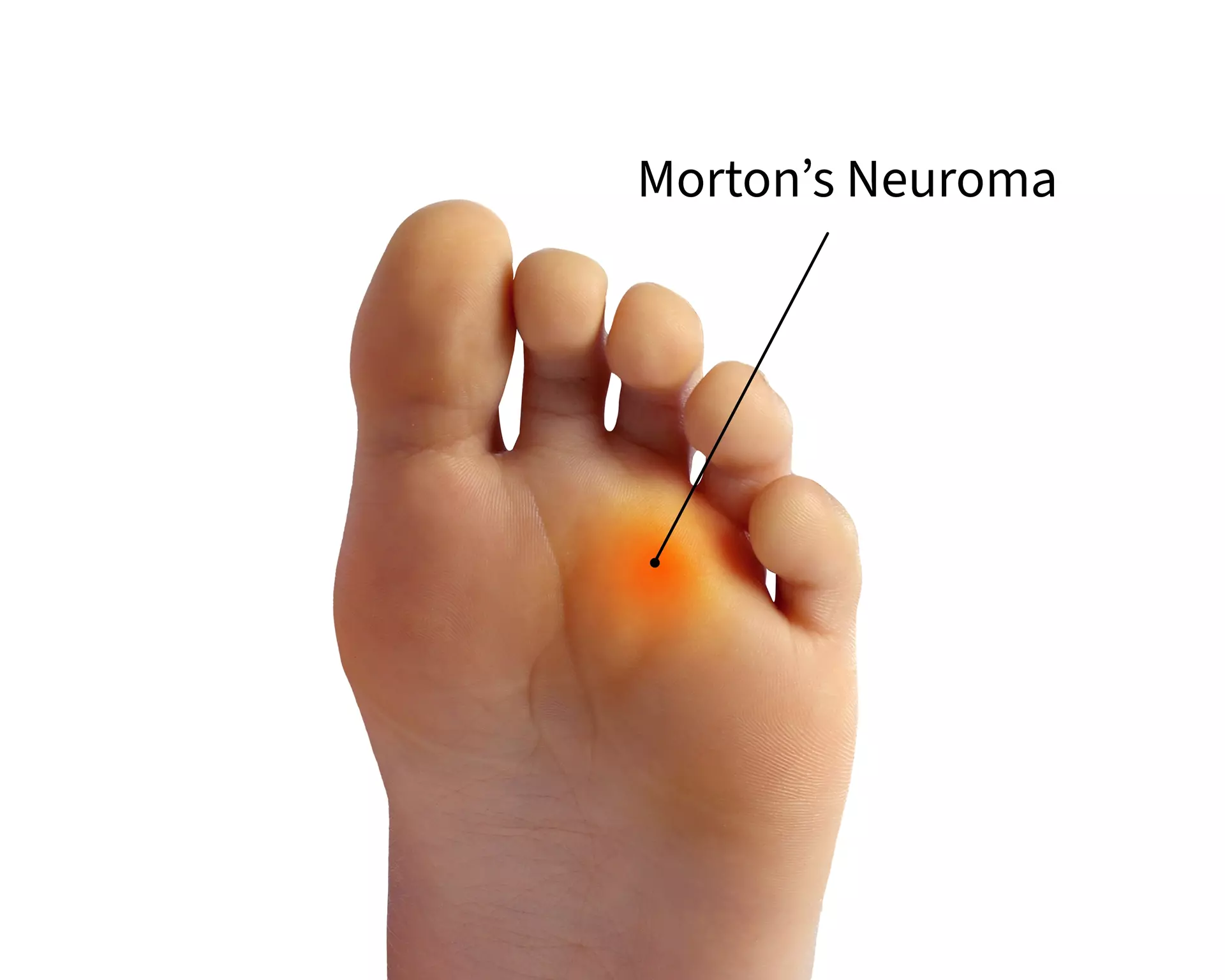
A neuroma is a benign thickening of nerve tissue that develops in response to irritation, compression, or repeated trauma. In the foot, neuromas most commonly occur between the third and fourth toes — a location known as Morton’s neuroma. As the nerve tissue thickens, it becomes compressed with every step, producing a distinctive and often debilitating set of symptoms.
Although neuromas are not cancerous, they can progressively worsen without treatment. The longer the nerve is subjected to irritation and compression, the more difficult the condition can become to treat. Early evaluation and intervention are key to achieving the best outcome.
Symptoms of a Neuroma
Neuroma symptoms tend to develop gradually and may come and go at first before becoming more persistent. Common symptoms include:
- A sensation of a pebble, lump, or bunched sock under the ball of the foot
- Sharp, burning, or shooting pain in the ball of the foot
- Tingling or numbness in the toes — particularly the third and fourth toes
- Swelling between the toes
- Pain that worsens when walking or wearing tight shoes and eases with rest or removing footwear
Symptoms are often most noticeable in tight-fitting shoes or high heels, which compress the forefoot and increase pressure on the affected nerve.
What Causes a Neuroma?
Neuromas develop when a nerve in the foot is subjected to chronic irritation or compression. Contributing factors include:
- Wearing tight, narrow, or high-heeled shoes that squeeze the forefoot
- Repetitive stress on the ball of the foot from activities like running, dancing, or court sports
- Abnormal foot mechanics, such as flat feet, high arches, or bunions
- A previous injury or trauma to the foot
- Jobs that require prolonged standing or walking on hard surfaces
How Is a Neuroma Diagnosed?
Dr. Suh diagnoses neuromas through a thorough physical examination of the foot. He will assess your symptoms, review your medical history, and palpate the affected area to locate the source of pain. A characteristic “click” felt during examination — known as Mulder’s sign — is a reliable indicator of Morton’s neuroma. In some cases, Dr. Suh may order an ultrasound or MRI to confirm the diagnosis and rule out other causes of forefoot pain.
Neuroma Treatment at DFW Foot and Ankle
The goal of neuroma treatment is to relieve pressure on the affected nerve and reduce inflammation. Dr. Suh takes a conservative-first approach, with surgical options reserved for cases that do not respond to non-surgical care.
Footwear Modifications
Switching to shoes with a wider toe box and lower heel immediately reduces the compression that aggravates the nerve. This simple change alone can provide meaningful relief for many patients.
Custom Orthotics
Custom orthotics are designed to offload pressure from the area around the affected nerve and correct any underlying biomechanical issues — such as overpronation or a dropped metatarsal — that may be contributing to the problem. They are one of the most effective long-term management tools for neuromas.
Corticosteroid Injections
Cortisone injections deliver anti-inflammatory medication directly to the site of the neuroma, reducing swelling around the nerve and providing targeted pain relief. They are often used when other conservative measures provide insufficient relief.
MLS Laser Therapy
MLS laser therapy can help reduce inflammation around the nerve and promote tissue healing, offering a non-invasive option for patients who want to avoid injections or surgery.
Surgical Treatment
If conservative treatments fail to provide adequate relief after several months, surgical removal or decompression of the affected nerve may be recommended. Dr. Suh will discuss all options with you thoroughly before any surgical intervention is considered.
Schedule Your Neuroma Consultation in Flower Mound, TX
Don’t ignore persistent foot pain in the ball of your foot. The sooner a neuroma is diagnosed and treated, the more treatment options are available and the faster you’ll find relief. Call DFW Foot and Ankle at (972) 899-2170 or book online to see Dr. Suh in Flower Mound, TX.
Neuroma FAQs
What is Morton’s neuroma and how is it different from other neuromas?
Morton’s neuroma is the most common type of foot neuroma, specifically affecting the nerve between the third and fourth toes. While neuromas can technically occur elsewhere in the foot, Morton’s neuroma accounts for the vast majority of cases and has a distinctive set of symptoms including burning pain, tingling, and the sensation of a pebble under the foot.
Can a neuroma go away on its own?
Mild cases may improve with footwear changes and reduced activity, but most neuromas do not resolve without some form of treatment. Without addressing the underlying compression, the nerve tissue continues to thicken and symptoms typically worsen over time. Early treatment is always recommended.
Are custom orthotics effective for neuromas?
Yes. Custom orthotics are one of the most effective non-surgical treatments for neuromas. They are designed to redistribute pressure away from the affected nerve, correct foot mechanics that contribute to nerve compression, and provide lasting support. Many patients experience significant improvement with custom orthotics alone.
Do I need surgery for a neuroma?
Surgery is not necessary for most patients with neuromas. The majority of cases respond well to conservative treatments such as footwear modifications, custom orthotics, and corticosteroid injections. Surgery is considered only when non-surgical options have been thoroughly tried without adequate relief.
What type of shoes should I wear if I have a neuroma?
Shoes with a wide toe box, low heel, and good arch support are best for neuroma sufferers. Avoid narrow, pointed-toe shoes and high heels, which squeeze the forefoot and compress the affected nerve. Dr. Suh can provide guidance on appropriate footwear during your consultation.
Can neuromas come back after treatment?
Conservative treatments manage symptoms but may not permanently eliminate the nerve thickening. With ongoing use of custom orthotics and appropriate footwear, many patients maintain good symptom control long-term. In cases where the nerve is surgically removed, recurrence is uncommon but possible.
Is neuroma pain only in the toes?
Neuroma pain is primarily felt in the ball of the foot and can radiate into the toes — typically the third and fourth. Some patients also feel it shooting up toward the arch or ankle. The location and quality of pain helps Dr. Suh distinguish a neuroma from other causes of forefoot pain such as metatarsalgia or stress fractures.