Flat Feet Treatment in Flower Mound, TX
Flat feet — also known as fallen arches or pes planus — are more than just a cosmetic concern. When the arch collapses, it can affect the alignment of the entire lower body, leading to pain in the feet, ankles, knees, hips, and lower back. At DFW Foot and Ankle, Dr. Davey Suh provides personalized flat feet evaluation and treatment for patients of all ages in Flower Mound, TX. Call (972) 899-2170 to schedule your appointment.
What Are Flat Feet?
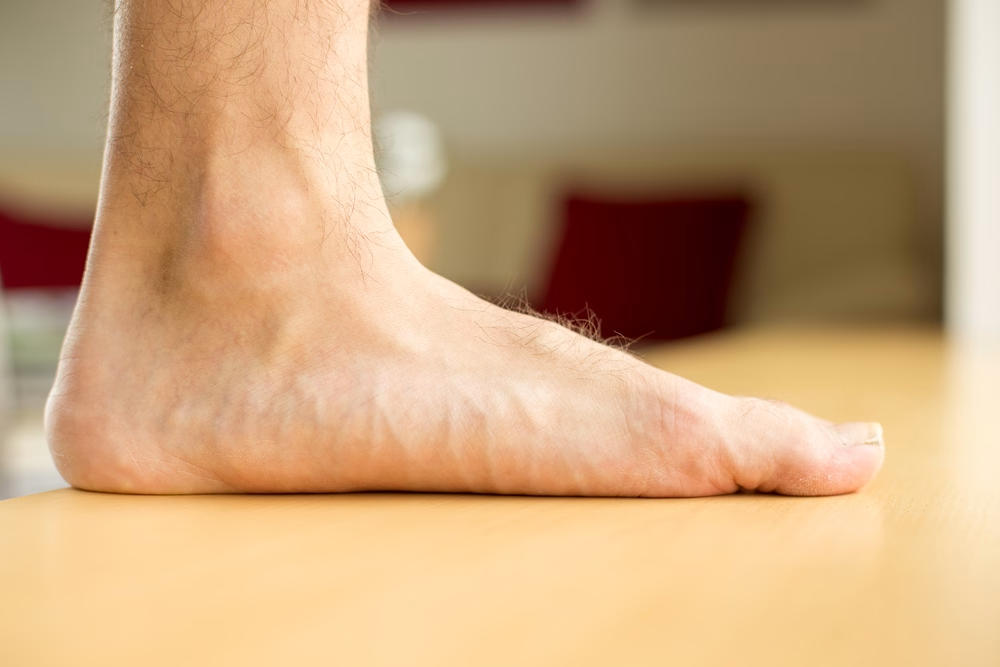
Flat feet is a condition in which the arch of the foot collapses so that the entire sole comes into contact — or near contact — with the ground when standing. In a normal foot, the arch creates a gap between the inner foot and the floor when you stand. In a flat foot, this arch is reduced or absent entirely.
Some people are born with flat feet, while others develop the condition over time. In children, it is quite common for the arch to appear absent before age 6 or 7, as the arch typically develops during early childhood. However, when flat feet persist into adolescence and adulthood, or when they begin to cause pain and functional problems, professional evaluation and treatment become important.
Types of Flat Feet
Flexible flat feet are the most common type. The arch is visible when the foot is unloaded — sitting or standing on tiptoe — but disappears when standing flat. This type is often asymptomatic in children but can cause pain and problems in adulthood if not properly supported.
Rigid flat feet have no arch regardless of whether the foot is loaded or unloaded. This type is less common and more often associated with underlying structural abnormalities or conditions like tarsal coalition.
Adult-acquired flat foot (also called posterior tibial tendon dysfunction) develops when the tendon that supports the arch weakens or tears over time, causing the arch to progressively collapse. It is more common in adults over 40 and can cause significant pain and disability without treatment.
What Causes Flat Feet?
Flat feet can result from a variety of factors, including inherited foot structure, developmental issues, injury to the foot or ankle, arthritis affecting the foot joints, obesity, and posterior tibial tendon dysfunction. Prolonged standing or walking on hard surfaces and wearing unsupportive footwear can also contribute to arch collapse over time.
Symptoms of Flat Feet
Many people with flat feet experience no symptoms at all. However, when flat feet cause pain or functional problems, common symptoms include:
- Aching or fatigue in the feet, particularly in the arch and heel area
- Pain that worsens with prolonged standing, walking, or physical activity
- Swelling along the inner ankle
- Leg fatigue — children with flat feet often complain that their legs tire quickly
- Knee, hip, or lower back pain due to altered body mechanics
- Overpronation — the inward rolling of the ankle during gait
- Difficulty standing on tiptoe
Flat Feet Treatment at DFW Foot and Ankle
Most cases of flat feet can be effectively managed without surgery. Dr. Suh will evaluate your foot structure, gait mechanics, and symptoms to develop a personalized treatment plan. Common treatment options include:
Custom Orthotics
Custom orthotics are among the most effective treatments for flat feet. They are fabricated using a 3D scan of your feet to provide precise arch support, correct overpronation, redistribute pressure across the foot, and improve alignment throughout the lower extremity. Unlike off-the-shelf insoles, custom orthotics address the specific shape and mechanics of your individual feet.
Supportive Footwear
Wearing shoes with adequate arch support and motion control features is a simple but important first step. Dr. Suh can advise you on footwear that is appropriate for your degree of flat foot and your activity level.
Physical Therapy and Stretching
Strengthening the muscles that support the arch — including the intrinsic foot muscles, calf muscles, and posterior tibial tendon — can improve arch function and reduce pain. Stretching the calf and Achilles tendon is also important, as tightness in these structures can worsen flat foot symptoms.
MLS Laser Therapy
For flat feet associated with inflammation and pain in the tendon or soft tissue, MLS laser therapy can help reduce inflammation and promote healing — particularly for patients with posterior tibial tendon dysfunction.
Surgical Treatment
Surgery for flat feet is considered only when conservative treatment has failed to provide adequate relief and functional improvement. Surgical options range from tendon reconstruction to osteotomy (bone realignment) and joint fusion for severe cases.
Flat Feet in Children
As part of our children’s foot care services, Dr. Suh evaluates and treats pediatric flat feet. Most children with flexible flat feet don’t require intervention unless symptoms are present — such as foot pain, leg fatigue after walking short distances, or difficulty participating in sports. When treatment is needed, custom orthotics are typically the first-line approach. Call (972) 899-2170 to schedule an evaluation for your child.
Flat Feet FAQs
Are flat feet a serious condition?
Flat feet are not dangerous on their own, and many people with flat feet live completely pain-free. However, when flat feet cause pain, affect your gait, or lead to compensatory problems in the ankles, knees, hips, or back, they become a clinical concern that warrants evaluation and treatment. Dr. Suh will help you determine whether your flat feet need to be addressed.
Can flat feet be corrected?
In most cases, the structural appearance of flat feet cannot be fully corrected without surgery. However, the pain and functional problems caused by flat feet can almost always be effectively managed with conservative treatment — particularly custom orthotics, appropriate footwear, and targeted exercises. Many patients experience complete resolution of their symptoms with non-surgical care.
Do children outgrow flat feet?
Many children do develop an arch naturally by age 6 to 8 as the foot matures. However, some children retain flat feet into adulthood. If your child has flat feet and complains of foot pain, leg fatigue, or difficulty keeping up with peers physically, an evaluation with Dr. Suh is recommended.
Can flat feet cause knee or back pain?
Yes. The foot is the foundation of the body’s kinetic chain. When the arch collapses and the ankle rolls inward (overpronation), it creates a cascading effect that alters alignment in the knees, hips, and spine. Many patients with flat feet experience knee pain, hip pain, or lower back pain that improves significantly when their foot mechanics are corrected with custom orthotics.
What is the best exercise for flat feet?
Exercises that strengthen the arch-supporting muscles include towel scrunches, short foot exercises, calf raises, and single-leg balance drills. Stretching the calf and Achilles tendon is also important. Dr. Suh or a physical therapist can guide you through the most effective program for your specific needs.
How do I know if I need custom orthotics for flat feet?
If you have flat feet and experience pain in your feet, ankles, knees, or back, or if you are an athlete whose performance is affected by foot mechanics, custom orthotics are likely to help. Dr. Suh will assess your gait and foot structure and recommend orthotics if they are the appropriate next step.
Can flat feet get worse over time?
Yes, particularly in cases of adult-acquired flat foot caused by posterior tibial tendon dysfunction. Without treatment, the tendon continues to weaken and the arch progressively collapses, potentially leading to permanent structural changes. Early treatment is the best way to prevent progression and preserve function.