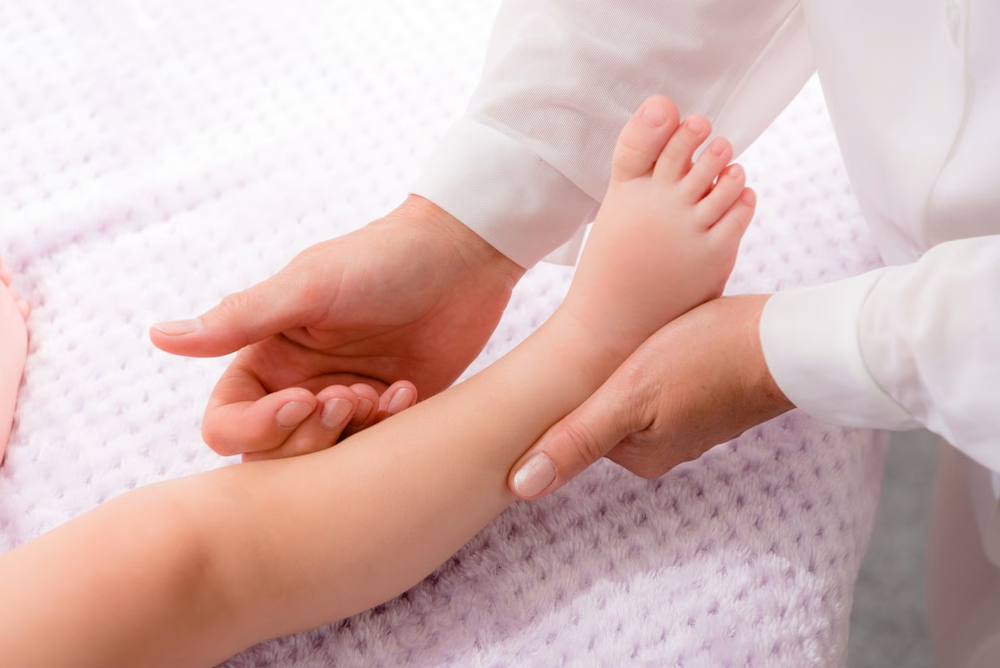
Children’s Foot Care in Flower Mound, TX
Healthy feet are foundational to a child’s ability to run, play, and thrive. When foot or ankle problems go unaddressed during childhood, they can affect gait development, activity participation, and comfort well into adulthood. At DFW Foot and Ankle, Dr. Davey Suh provides compassionate, expert pediatric foot care for children and adolescents throughout Flower Mound, TX. Call (972) 899-2170 to schedule your child’s appointment today.
Pediatric Foot Development
A child’s foot is not simply a small version of an adult foot — it is a rapidly developing structure that goes through significant changes from infancy through adolescence. The arch of the foot typically begins to develop around age 3 and continues forming until approximately age 8. During this window, it is normal for younger children to appear to have flat feet when standing, a condition known as flexible flatfoot.
In flexible flatfoot, the arch is visible when the child is seated or standing on tiptoe but disappears when weight is placed on the foot. This is generally not a cause for concern in young children. However, if flatfoot persists past age 8, causes pain, limits activity, or is accompanied by abnormal gait patterns, evaluation and treatment may be appropriate. Dr. Suh monitors foot development over time and intervenes with custom orthotics or other treatments when needed.
Common Pediatric Foot Conditions We Treat
Pediatric Flat Feet
While many children outgrow flat feet, some develop symptoms as they enter adolescence — including arch pain, leg fatigue after walking short distances, and difficulty keeping up with peers in physical activity. Children with symptomatic flat feet often say “my legs are tired” after minimal activity. Custom orthotics prescribed by Dr. Suh are typically the first and most effective intervention, providing arch support and correcting overpronation without limiting activity.
Sever’s Disease
Sever’s disease — also called calcaneal apophysitis — is the most common cause of heel pain in active children and adolescents, typically affecting those between ages 8 and 14. Despite its name, it is not actually a disease but a growth-related condition. During periods of rapid growth, the heel bone can grow faster than the surrounding muscles and tendons, causing the Achilles tendon to pull on the heel’s growth plate. The result is pain and tenderness at the back of the heel, often worsened by running and jumping sports.
Treatment for Sever’s disease focuses on relieving symptoms and protecting the growth plate. Options include activity modification, stretching programs for the calf and Achilles tendon, heel cups or custom orthotics, RICE therapy, and anti-inflammatory medications. Sever’s disease typically resolves on its own once growth slows, but Dr. Suh can help manage symptoms so your child doesn’t have to sit on the sidelines.
Plantar Warts
Plantar warts are caused by certain strains of the human papillomavirus (HPV) and develop on the bottom of the foot. They can be painful, particularly when located on a weight-bearing surface, and may be mistaken for calluses. Without treatment, plantar warts can persist for years, spread to other areas of the foot, and become increasingly uncomfortable. Dr. Suh offers safe, effective wart removal for children using professional-grade treatments.
Pediatric Sports Injuries
Children and adolescents who participate in sports are prone to foot and ankle injuries including ankle sprains, stress fractures, and tendon injuries. As part of our sports medicine services, Dr. Suh provides accurate diagnosis and treatment for pediatric sports injuries — helping young athletes recover fully and safely return to their activities. Early treatment leads to better outcomes and reduces the risk of chronic problems.
In-Toeing and Out-Toeing
Some children walk with their toes pointed inward (in-toeing) or outward (out-toeing). While these gait patterns often self-correct with age, persistent cases can cause tripping, pain, and long-term biomechanical issues. Dr. Suh will assess whether intervention — such as custom orthotics or physical therapy referral — is appropriate.
Ingrown Toenails
Children are not immune to ingrown toenails, particularly when shoes are too tight or nails are cut incorrectly. Dr. Suh provides gentle, fast ingrown toenail treatment for children, making the experience as comfortable as possible.
Treatment Approach for Pediatric Patients
Dr. Suh always prioritizes the least invasive, most conservative treatment approach for children. Common treatment options include:
- Custom orthotics tailored to the child’s developing foot
- Stretching and strengthening programs
- RICE therapy (Rest, Ice, Compression, Elevation) for acute injuries
- Appropriate footwear guidance for activity and daily use
- NSAIDs for pain and inflammation management (with appropriate dosing guidance)
- Professional wart treatment
- Surgical referral in rare cases where conservative care is insufficient
When Should My Child See a Podiatrist?
You should schedule an appointment at DFW Foot and Ankle if your child complains of foot or ankle pain, seems to tire easily after walking or activity, has difficulty keeping up with peers physically, walks with an unusual gait, has flat feet with symptoms, develops a wart or nail problem, or sustains a foot or ankle injury during sports. Early evaluation leads to better outcomes — call (972) 899-2170 today.
Children’s Foot Care FAQs
When should I be concerned about my child’s flat feet?
Flat feet in young children (under age 6) are generally normal and usually resolve on their own. You should see Dr. Suh if your child is over age 6 and still has flat feet along with any of the following: foot or ankle pain, leg fatigue after short walks, difficulty participating in physical activity, frequent tripping, or an abnormal walking pattern. Early intervention with custom orthotics can prevent symptoms from progressing.
What is Sever’s disease and how is it treated?
Sever’s disease is a growth-related heel pain condition common in active children ages 8 to 14. It occurs when the heel bone grows faster than the surrounding tendons, causing the Achilles tendon to pull on the growth plate. Treatment includes activity modification, calf and Achilles stretching, heel cushioning, and sometimes custom orthotics. It typically resolves completely once growth slows.
Can children wear custom orthotics?
Yes. Custom orthotics are an excellent and commonly used treatment for children with flat feet, overpronation, Sever’s disease, and other foot conditions. Dr. Suh designs pediatric orthotics that accommodate the child’s developing foot structure. Because children’s feet grow quickly, orthotics may need to be replaced every 1 to 2 years.
How do I know if my child’s foot pain is serious?
Foot pain in children should never be dismissed as “growing pains.” If your child consistently complains of foot or heel pain, avoids physical activity due to discomfort, limps, or shows swelling or bruising around a joint, these are signs that professional evaluation is warranted. Dr. Suh will assess the cause of your child’s pain and recommend appropriate treatment.
Are plantar warts contagious?
Yes. The HPV virus that causes plantar warts is contagious and can spread through direct contact or contaminated surfaces — particularly in communal areas like pool decks and locker rooms. Wearing sandals in shared wet areas reduces your child’s risk. If your child has a plantar wart, professional treatment is more effective and faster than over-the-counter options.
What kind of shoes should children wear to support healthy foot development?
Children’s shoes should fit properly with adequate toe room, provide good arch support, and be appropriate for the activity. Avoid overly stiff shoes for young children whose feet are still developing flexibility. Dr. Suh can provide specific footwear recommendations based on your child’s foot type and any conditions being treated.
Can childhood foot problems affect posture and development?
Yes. Untreated foot conditions like flat feet and overpronation can affect the alignment of the knees, hips, and spine as a child grows, potentially contributing to knee pain, hip discomfort, and poor posture. Addressing foot mechanics early — ideally with custom orthotics and appropriate footwear — supports healthy musculoskeletal development throughout childhood and into adulthood.